29 July 2026
Caudan Arts Centre
Port-Louis · Mauritius
Design an AI-Ready Business
It is a human responsibility.
Seven speakers, seven vocabularies, one diagnosis. Plus a 7-page report: why companies use AI everywhere and only a handful capture its value.
Mooove Business Review · N° 01 · 2026mooove.club
MOOOVE FWD #3 · Contents02
Contents.
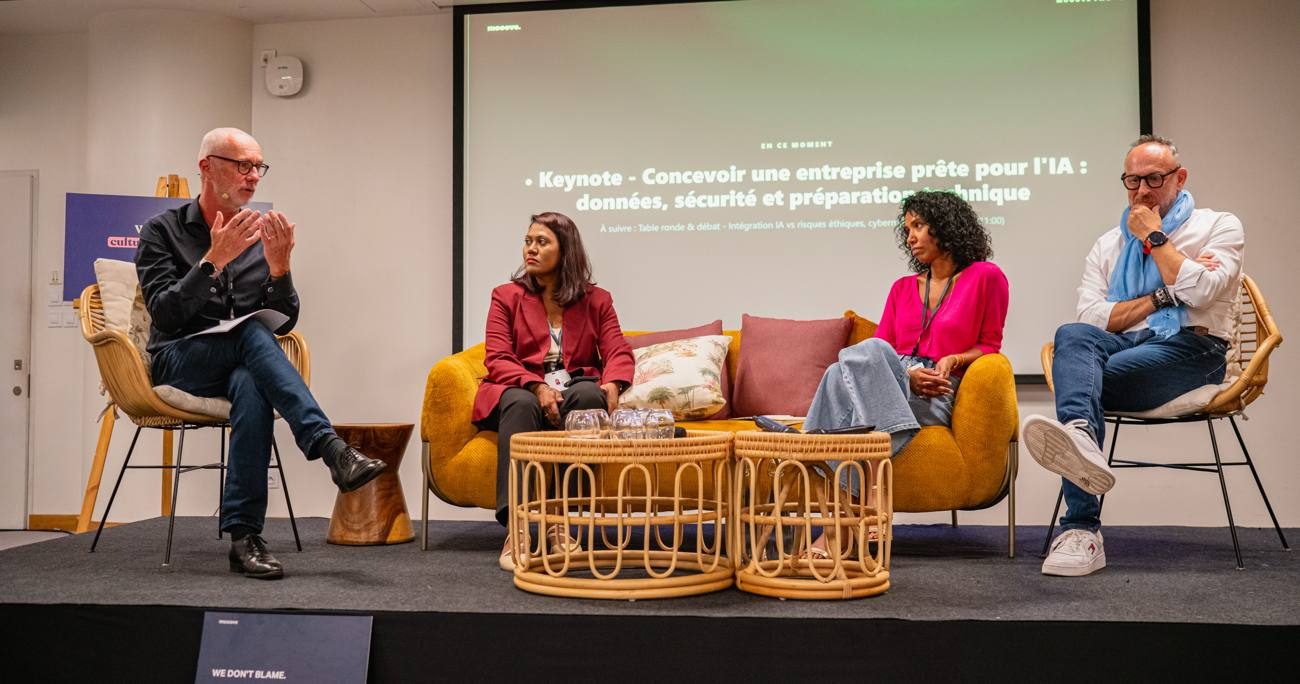
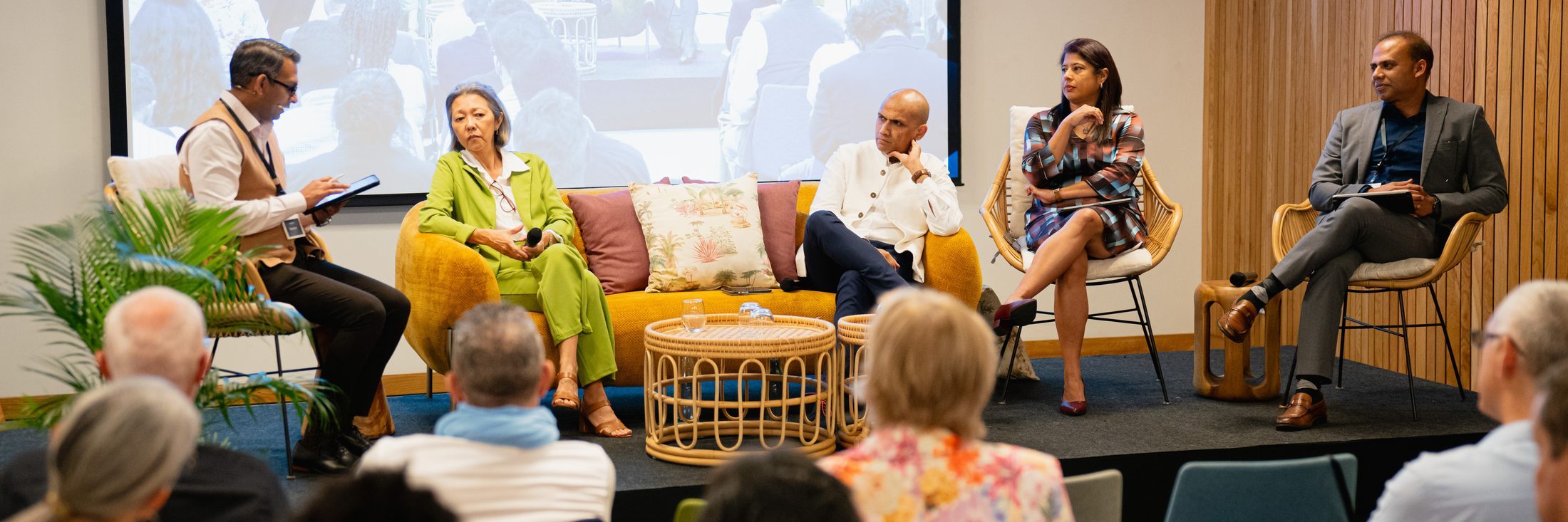
The morning panel · Marc Israel, Pratimah Jugoo Teeluckdharry, Anouchka Sooriamoorthy and Jean-Michel Lavallard · Photo Laurent Frédéric
The conference
03
Editor's note
From tool to transformation, by Emmanuel Maujean.
05
Seven voices, one root cause
The story of the day, and an editorial reading of what the stage kept repeating.
07
Keynote · Marc Israel
The lag is not technological. It is organisational.
11
Panel · Governance and judgement
The same mistakes, only faster. And the grid to avoid them.
17
Keynote · Manish Bundhun
What a company must not outsource.
19
Panel · Culture and transformation
Don't hand out the fish. Train better fishermen.
The report
25
Why the pilot dies
What the pilot removes and production puts back, dimension by dimension.
27
10-20-70 and the two gaps
Where the effort really goes, and where the gaps widen.
28
The playbook
Seven steps, a priority score, a 90-day loop.
30
And Mauritius?
The MOOOVE study: 259 leaders, five tiers, a hollow in the middle.
32
What's next
Urban Retreat, the AI House, and three questions for Monday.
Post-conference magazine · Edited by MOOOVEMOOOVE · 2026 · 02
MOOOVE FWD #303
Editor's note · Emmanuel Maujean
From tool to transformation.
In February there were twenty of us at our first AI conference. On 29 July, more than a hundred executives, HR leaders and decision-makers gathered at the Caudan Arts Centre. And we keep coming back to the same question: how do you move from discovering tools to genuinely transforming a company, with concrete, measurable results?
That is the vision behind MOOOVE AI. Our job is to help companies understand what AI can actually change in the way they work, decide, train their teams and create value. Adopting AI means picking the right problem to solve, reshaping a process, and winning the teams over.
The approach is simple and concrete: start from a real problem and real usage, pick an accessible use case, train the teams, measure the results, then decide whether to go further. It also means accepting that you will test, correct, and sometimes stop what produces nothing.
That is the framework MOOOVE wants to bring to Mauritian companies: MOOOVE FWD, to understand, test ideas against each other and build fluency. The AI House, to learn and to practise. And support that connects the tools to the human and operational reality of each organisation.
This magazine extends that work with ideas, methods and concrete questions to move forward. Our goal is simple: to help Mauritian companies genuinely become AI-Ready, and to transform our performance together.
Emmanuel Maujean Founder, MOOOVE
The opening · “Let's Mooove.” · Photo Laurent Frédéric
“A company becomes AI-Ready when the people who follow are brought along. That is the mistake I made for three years.”
Emmanuel Maujean · Opening · 29 July
Three convictions
01Continuous fluency. It's a sport: the more you practise, the better you get.
02Use cases before tools. You start from a problem, never from the technology.
03Bring the followers along. Otherwise one person's head start becomes everyone's lag.
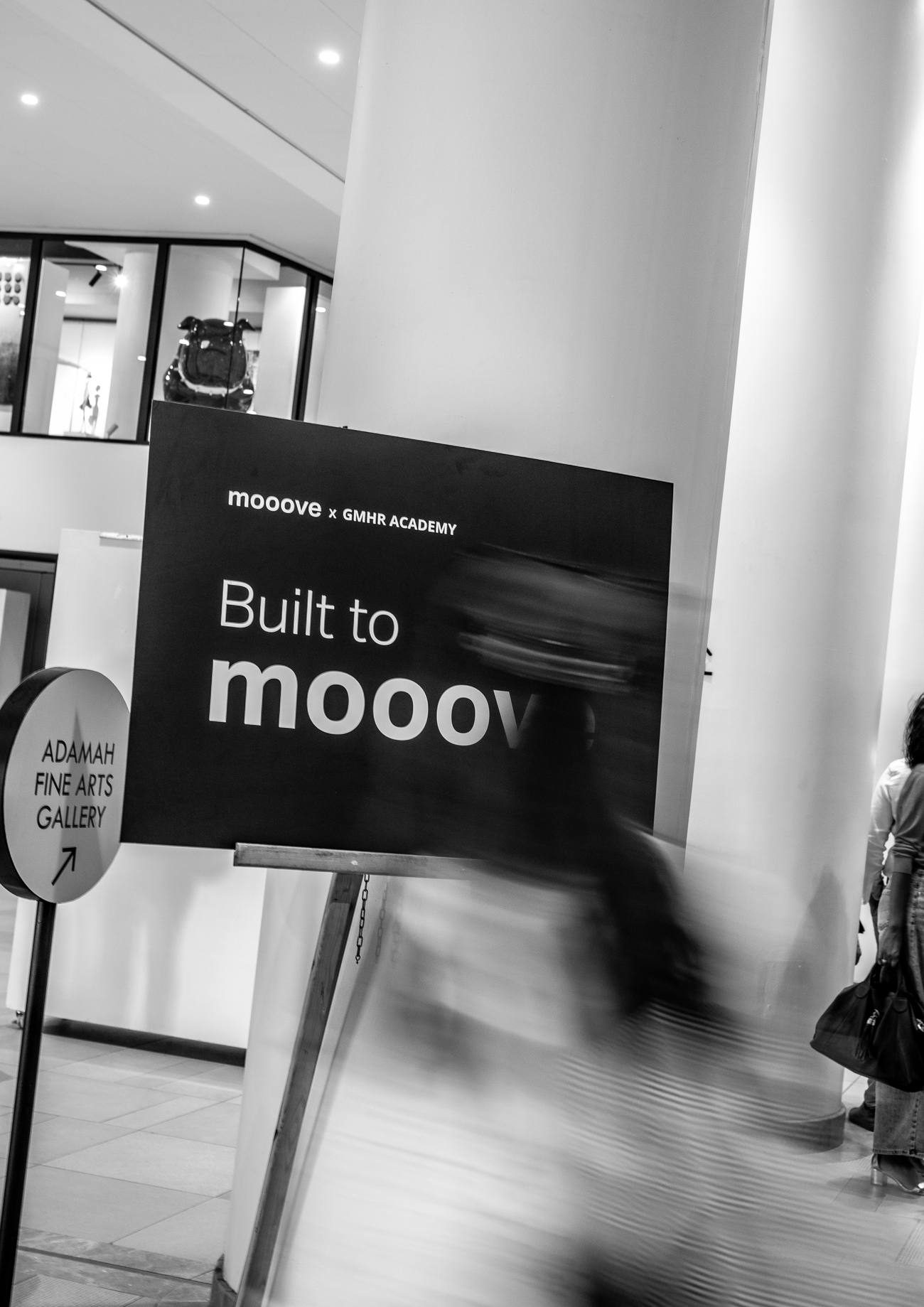
MOOOVE × GMHR Academy · Caudan Arts Centre, Port-LouisMOOOVE · 2026 · 03
Photo · Laurent Frédéric
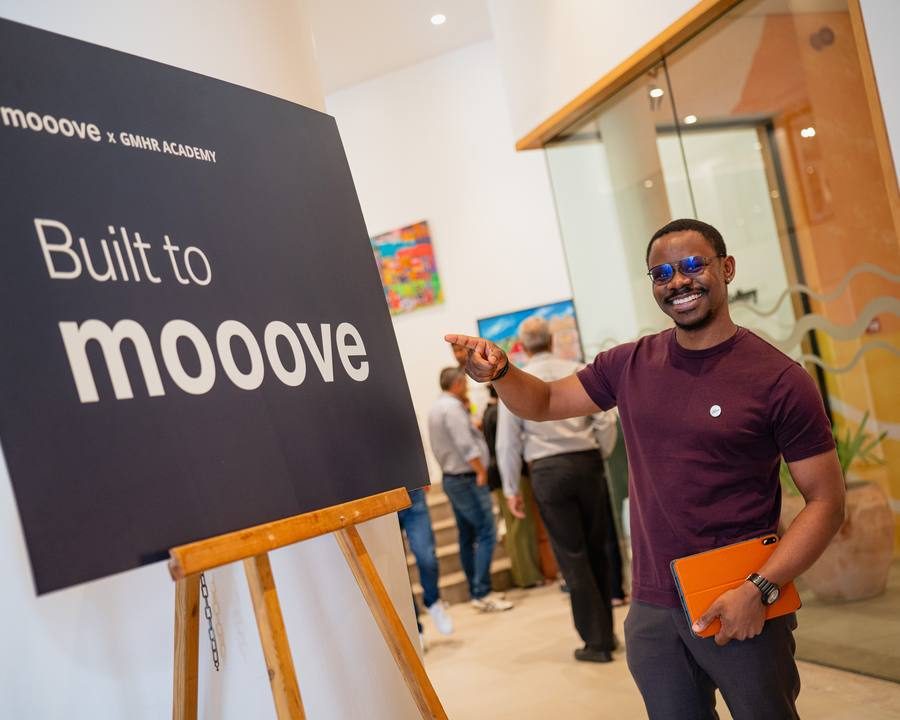
The conferenceArrival · 29 July 2026 · Caudan Arts Centre
The AI-Ready Business
One day to connect technical foundations, critical judgement and the behaviours that make adoption possible. More than a hundred decision-makers, seven speakers, one MC: Dr Ismaël Adam Essackjee.
MOOOVE FWD #3 · The story of the day05
Editorial reading
The day starts with technology. It ends with real work.
The through-line is not a contest between human and machine. It is a question of architecture: who decides, on what data, inside which process, and under what control?
Marc Israel opens the argument with the history of technological revolutions. A tool becomes productive when the organisation redesigns itself around it. The morning panel adds a condition: that redesign must remain explainable, secure and open to challenge.
Manish Bundhun then shifts the centre of gravity. The more the machine executes, the more a company must protect what gives work its direction: values, judgement, conscience and relationships. The afternoon panel closes the loop by showing that this transformation plays out in leadership behaviour, business ownership and the way processes are redesigned.
→
What to take away
Readiness is not an overall technical score. It is proven on one specific case, by a company's ability to connect a problem, an owner, data, a decision rule, users and a measure.
Foundations
Marc Israel: data, security, integration and repetition.
Judgement
Pratimah, Jean-Michel, Anouchka: rules, accountability and caution.
Jenny, Manish, Diya, Sandeep: psychological safety, culture, business ownership and redesign.
“Technology, you install. Transformation has to be led by people.”
Diya Nababsing-Jetshan · Afternoon panel
Editorial narrative · from the 29 July transcriptsMOOOVE · 2026 · 05
MOOOVE FWD #3 · The AI-Ready Business06
7
Speakers
Editorial reading
Seven voices. One root cause.
The words differ, the diagnosis converges: a tool transforms nothing until the company changes its data, its rules, its accountabilities and its habits.
The finding
Individual usage moves faster than processes. Licences prove neither adoption nor value.
The mechanism
AI amplifies the existing system. A confused process becomes faster, not sounder.
The implication
Leadership cannot delegate this to IT. The business must own the problem and the outcome.
The action
One precise problem. One owner. One measure. One human control, set before the prototype.
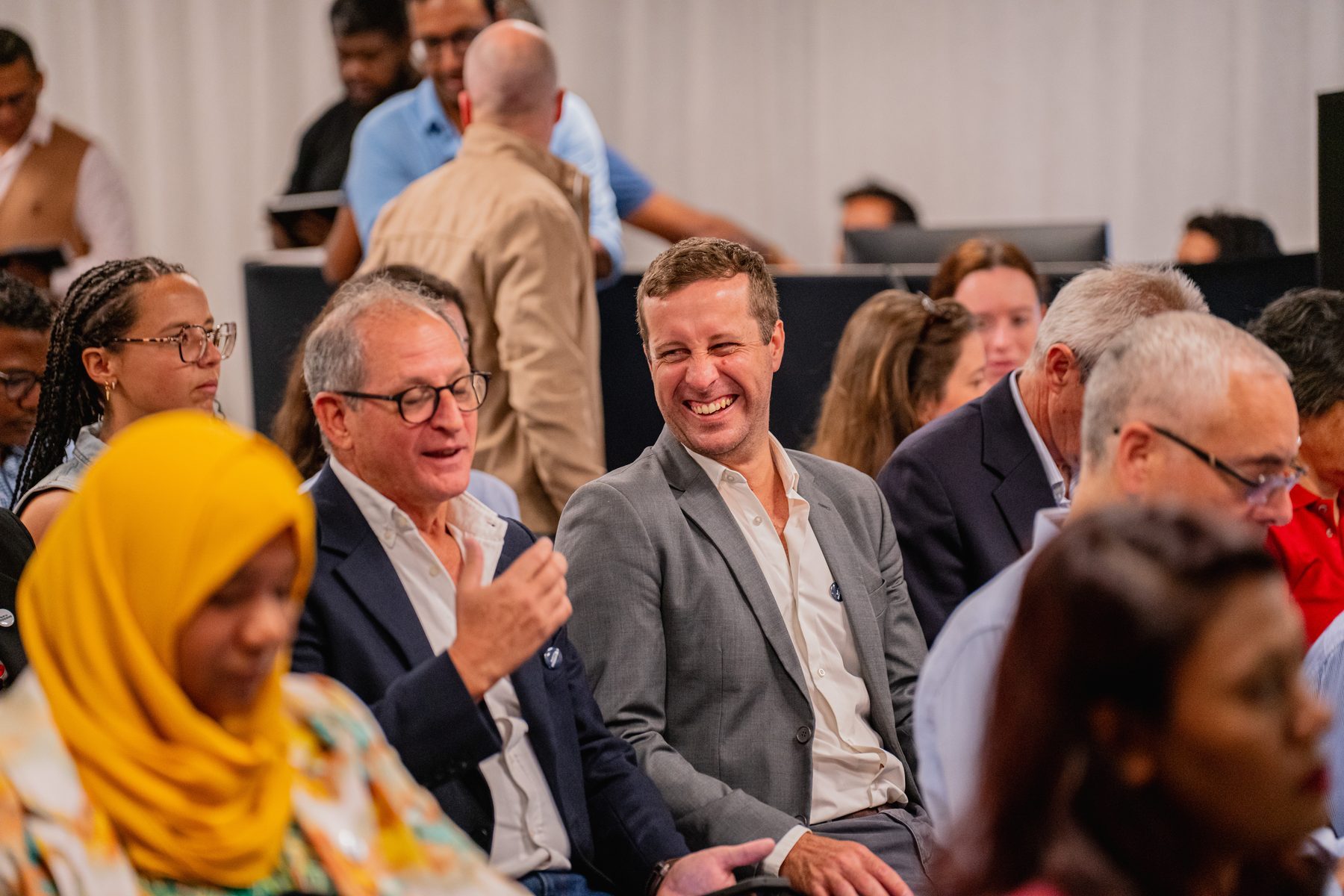
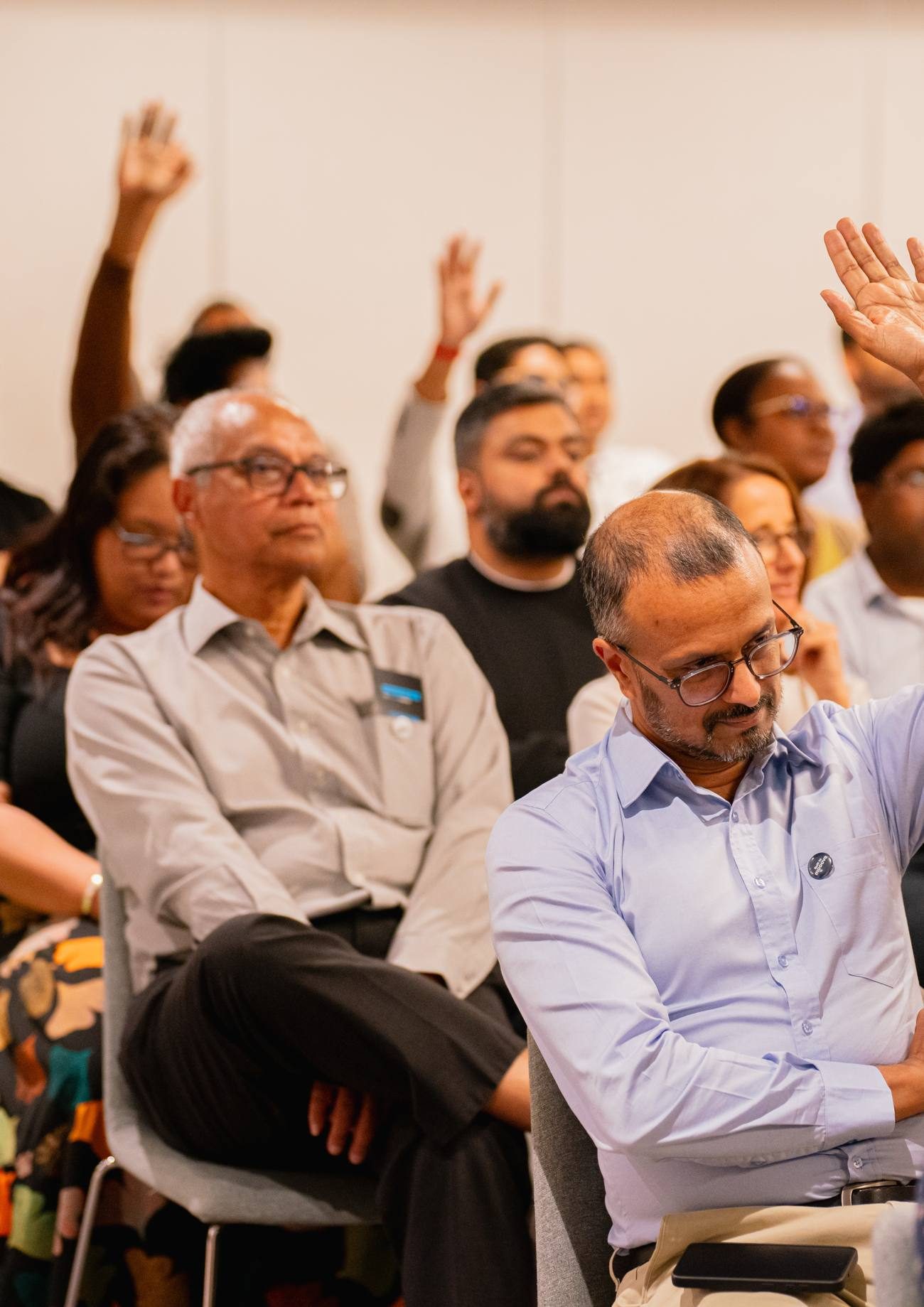
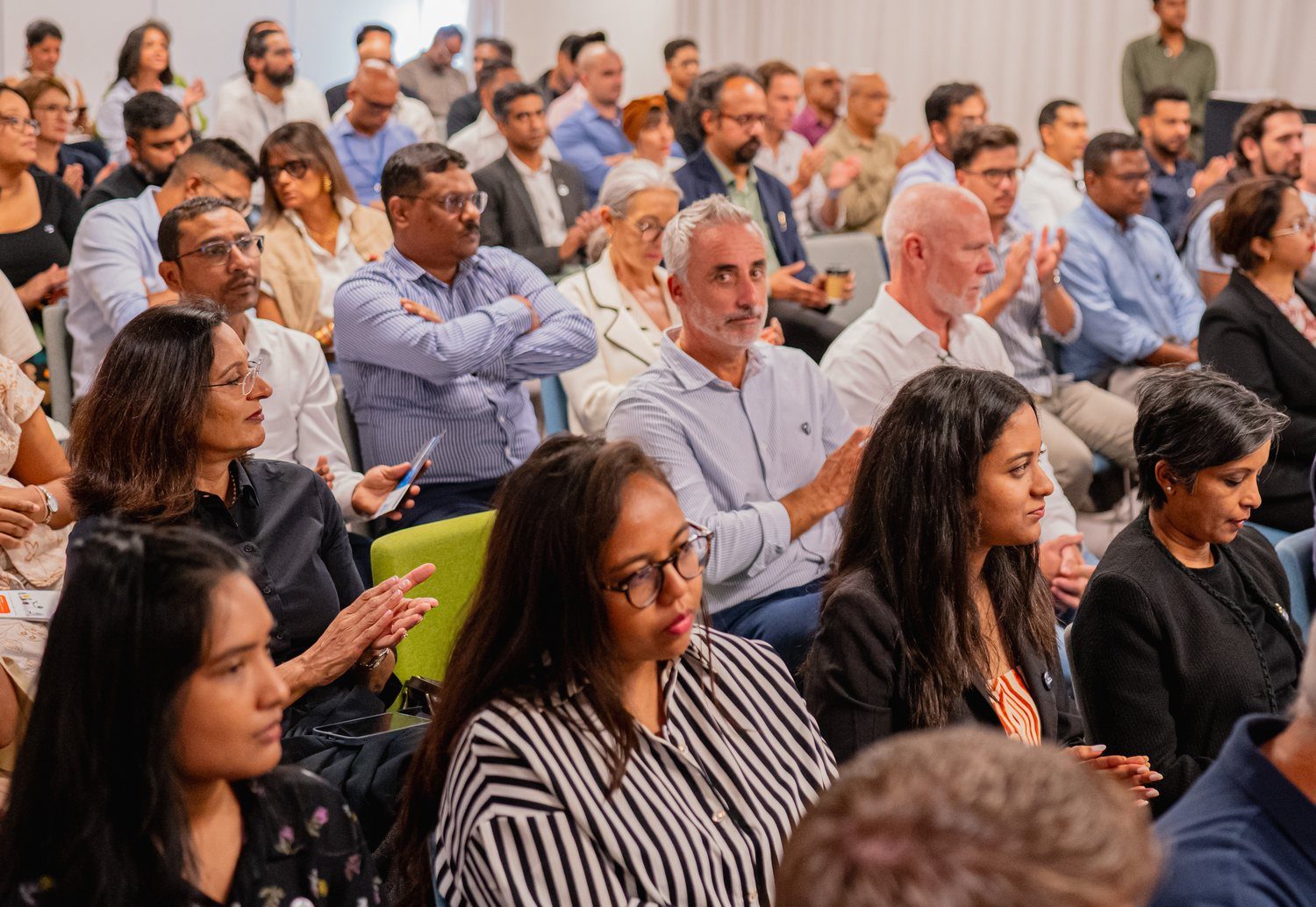
The room · More than a hundred leaders at the Caudan Arts Centre, 29 July · Photo Laurent Frédéric
Editorial narrative · from the 29 July transcriptsMOOOVE · 2026 · 06
MOOOVE FWD #3 · Conference · Keynote07
Marc Israel · CEO, Aetheis · former CTO, Microsoft
The lag is not technological. It is organisational.
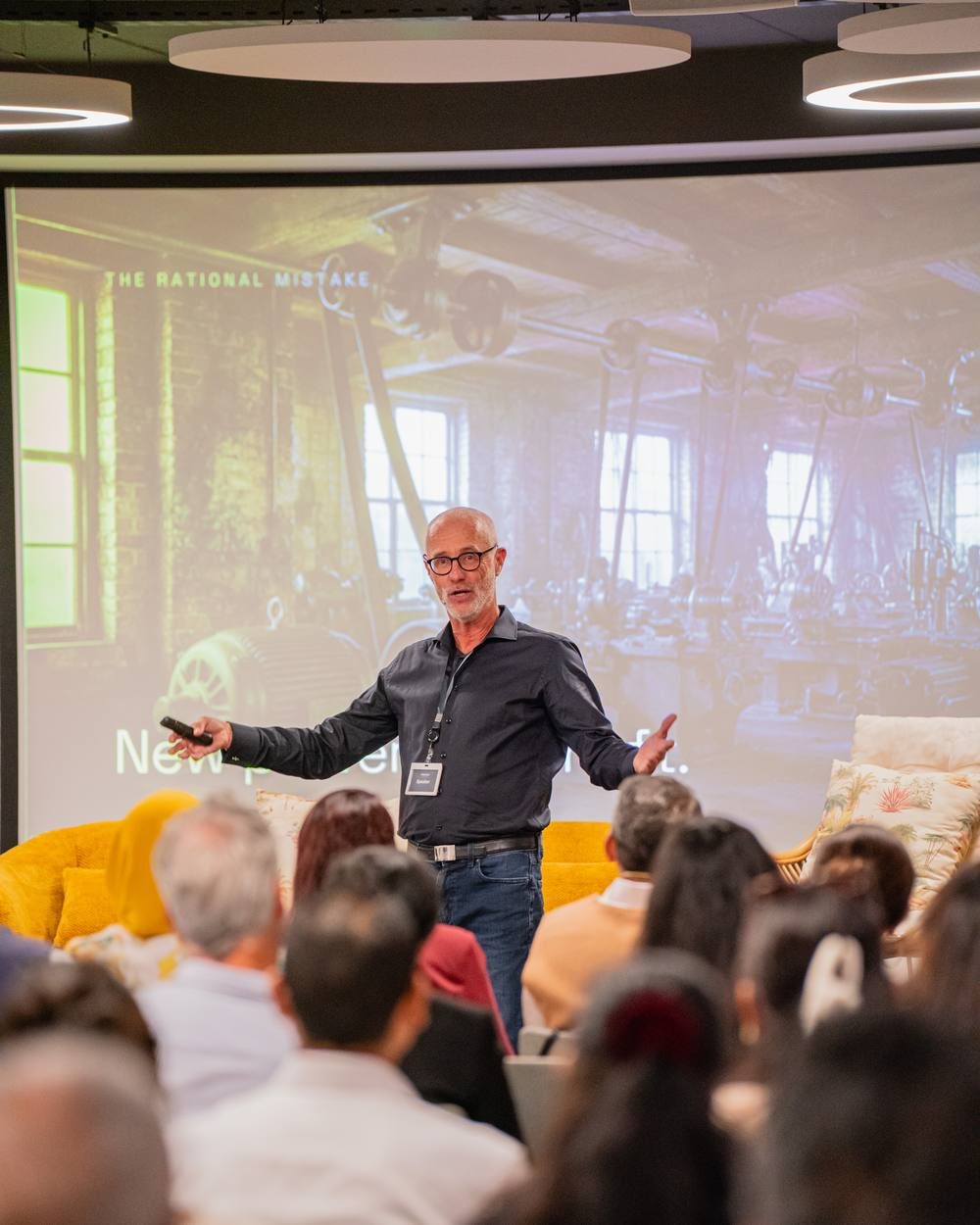
Electricity did not transform the factory overnight. Productivity rose when the factory was redesigned around electricity. Marc Israel applies the same logic to AI.
Technology advances faster than an organisation's ability to change its procedures, its decisions and its architecture. Marc Israel calls that gap the absorption gap, and that, he insists, is where the prize sits.
A pilot proves a task is possible. It does not prove the system can run on real data, with access rights, exceptions and varied users.
The useful question
In which workflow, under what control, with what measurable result?
20
years: the “20-year overnight,” his metaphor for a revolution that looks sudden only after a long build-up. Full reading on the next page.
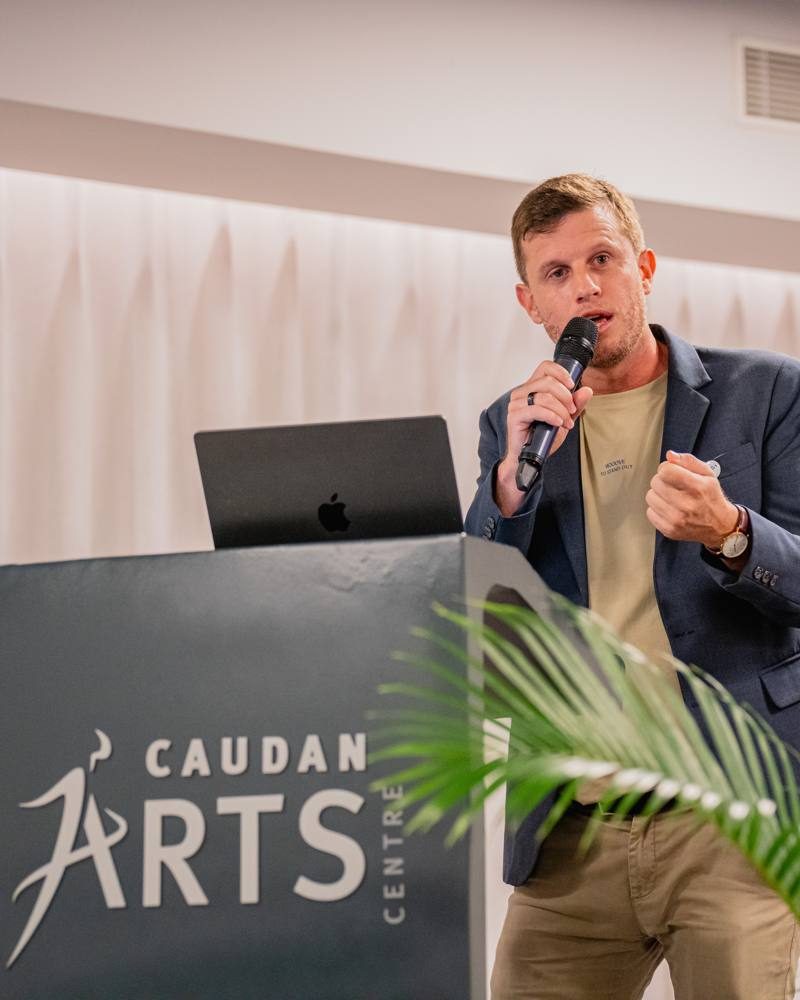
Marc Israel · “Designing an AI-ready business” · Behind him, the 1900 workshop: the technology had changed, productivity had not · Photo Laurent Frédéric
“We are not late to technology. We are late, collectively, to the rewiring of this economy.”
Marc Israel · Keynote transcript
Source · Transcript of Marc Israel's keynoteMOOOVE · 2026 · 07
MOOOVE FWD #3 · Conference · Keynote · Marc Israel08
The text · The “20-year overnight”
The absorption gap, and what you actually own.
The finding rests on an uncomfortable piece of arithmetic. Moore's law doubled computing power every twelve to eighteen months; AI today doubles roughly every six. A company growing 10 % a year takes seven years to double. “There is a huge gap between the speed at which companies grow and the speed at which AI grows.”
The mechanism explains why the gap stays invisible. The danger is not dying, it is not noticing: dinosaurs did not go extinct overnight, they declined for a long time without knowing they were declining. “Nobody feels like a dinosaur, until the day you discover your company is dead, or far from where it should have been.” Three excuses sustain the illusion. “We're not in that business”: every extinct species was a specialist. “We're running a pilot, it's moving”: a POC that never reaches production is nothing but a cost line. “We'll wait for things to settle”: later, it is no longer an advantage, it is catching up.
Then there is the number everyone brandishes for comfort, the MIT one: 95 % of generative-AI pilots fail. He reads it the other way round. “It is not an AI problem. It is a problem of how you apply this technology to your business.” McKinsey says the same thing differently: 62 % experiment, 23 % scale, 6 % see real value. Where others read a collective failure, he reads a window: the remaining 94 % are the opportunity. The report in this issue (p. 25) breaks down what the 6 % who succeed actually do.
Then comes the most useful question of the keynote: what do you actually own? Models, you rent. Prompts, you rent: the one from three years ago has nothing to do with today's. Interfaces, you rent. Three things you own: your data and the pipeline that cleans it; the way you evaluate results, which is your culture; and your judgement. “Two of those three are not IT matters. The worst thing you can do (sorry to the IT teams in the room) is let IT drive the AI conversation.”
The rest comes down to three requirements. Data and process quality: “where are your SOPs?”, a question that usually produces an awkward silence. Security, because an agent is an employee with access to your systems. And integration, where he dismisses the usual objection: “even an old AS/400, even a COBOL system can connect. The problem is not the legacy, it is the processes around the legacy.” He closes on a question he refuses to answer for you: if the modern company was built in an era when thinking was expensive, and intelligence suddenly becomes cheap, where do you set the line between what you automate and what you keep in human hands?
“A POC that never reaches production is nothing but a cost line.”
Marc Israel · on pilots
What you own
Rent vs own
Models, prompts, interfaces: rented. Clean data, evaluation of results, judgement: owned. That is where (and only where) durable advantage is built.
An AI-ready company does not merely own models. It wires the technology into four operational capabilities.
01The clock. Technology moves in six months; a board decision takes twelve to eighteen. “Good governance is not the enemy. The enemy is governance that says ‘maybe, but not yet’.” His proposal: ten pages every week rather than a thousand pages every three months. Risk reviewed more often is risk better managed.
02The curve. Every technological revolution takes forty-five to sixty years; the first twenty burn capital and build capacity, bubble included. Then comes deployment. “We are not late to technology. We are late, collectively, to the rewiring of this economy.”
03The reps. “You don't learn to ride a bike by watching the Tour de France on television.” The only route to competence is daily use. Blocking the tool manufactures shadow AI; better to open a clean door: the three-lane triage, next page.
04The cover. A model's useful life is measured in weeks: don't marry any of them. Plan on twelve months, not five years. “I worked on the AI strategy document for Mauritius 2030. I told the minister: I don't even know what will happen next December.”
The pilot is not the product. The product is the pilot embedded in real work.
What does not work
An isolated proof of concept, a board presentation, and generic training after the purchase.
The 1,000-rupee challenge
A twenty-dollar subscription, a task you repeat every day, an agent you build yourself. “It won't work the first time. But you will understand how it works.” Without practice, the day a salesperson pitches their AI suite, you won't follow a word.
From Marc Israel's keynote · 29 July 2026MOOOVE · 2026 · 09
Three lanes, so speed is never mistaken for recklessness.
Useful governance does not treat every use case as if it carried the same risk. The triage proposed during the keynote gives a leadership team a simple starting point.
Summarising public documents · drafting an agenda · brainstorming without client data · a draft the author still controls.
Decision: free to start in an approved tool, with light logging.
Amber lane
Internal or personal data, limited but real impact.
Contract analysis · preparing a client response · prioritising case files · an agent connected to a business system.
Decision: guardrails, human validation, error testing, a named owner.
Red lane
Regulated decisions, money, high or hard-to-reverse impact.
Credit or insurance with no human recourse · automated HR decisions · autonomous financial transactions · highly sensitive data.
Decision: do not deploy without legal, risk, security and regulatory review.
To do on Monday morning
Classify ten use cases already running in your company
Do not start by writing a policy. Start from real behaviour: which tools are used, which data gets pasted, which decisions get influenced. The first deliverable is a simple map that both the business and IT understand. The common mistake: a thirty-page policy with no concrete alternative; the employee then looks for the easiest option, usually outside governance.
“Caution is not inaction. It is the ability to tell what can move forward from what demands another form of control.”
Anouchka Sooriamoorthy · her reservation, kept as stated: speed is not a value in itself
Editorial source · Marc Israel's keynote and the morning panel · adapt to local and sector obligationsMOOOVE · 2026 · 10
MOOOVE FWD #3 · Conference · Morning panel11
Governance, security, ethics
The same mistakes, only faster.
A compliance officer, a technology executive and a philosopher. Three professions that never meet, and immediate agreement: what fails in AI projects is almost never technical in origin.
The morning panel · Moderated by Marc Israel · Photo Laurent Frédéric
Pratimah
Deploying a tool without preparing people, processes and culture solves nothing: “you make the same mistakes, only faster.” AI amplifies whatever you feed it; an organisation with fuzzy processes gets fuzziness faster. “AI is a powerful copilot. An organisation needs a trained pilot.”
Jean-Michel
Many rolled out Copilot without deciding what it was for: with no use case, it is one more licence. His reminder, worth pinning up in the boardroom: you ask the question, AI answers, you analyse, you decide. Three acts out of four stay human; training those three pays more than optimising the fourth.
Anouchka
A relationship with AI “closer to idolatry than to a scientific process”: it gets installed as the answer to problems nobody ever stated. And these tools flatter us constantly: what happens to our ability to take a reasoned contradiction, when our other interlocutor agrees with us all day long?
“Between what I delegate, what I ask for and what I produce myself, we are no longer even able to take a critical step back on our own relationship to knowledge.”
Anouchka Sooriamoorthy · on metacognition
Source · Transcript of the morning panelMOOOVE · 2026 · 11
MOOOVE FWD #3 · Morning panel · Human judgement12
Accountable, explainable, contestable.
On security, Pratimah Jugoo Teeluckdharry refuses the lazy answer. Employees who paste confidential data into a free tool are not acting maliciously but efficiently, like the Samsung engineers with their code. Banning it only produces shadow AI. Her method fits in six lines: page 14, because it deserves to be applied as it stands.
On bias, the moderator's example stayed with the room: ask an image generator to draw a princess. Very pale skin, blue eyes, European medieval castle, a hundred per cent of the time. Anouchka Sooriamoorthy draws a Mauritian question from it: “who on this planet is interested in our voice?” The available imaginaries remain overwhelmingly Western, and these tools reinforce them. Her conviction: “our salvation will be African.”
On accountability, the debate closes quickly: it is human, always. The Air Canada precedent proves it: a chatbot invents a refund policy, the airline argues it is “a separate entity, responsible for its own actions”, the tribunal rules against the airline. “A chatbot cannot appear before a court. It cannot explain itself.”
On schools, the morning's only genuine disagreement, kept as it was. Anouchka Sooriamoorthy takes a conservative position: protect attention, analytical reading, debate. Jean-Michel Lavallard takes the other side: when 80 % of homework is done and marked by AI, nobody learns; school needs revolutionising, not freezing. The disagreement resolves into a formula: protect the skills, modernise the means.
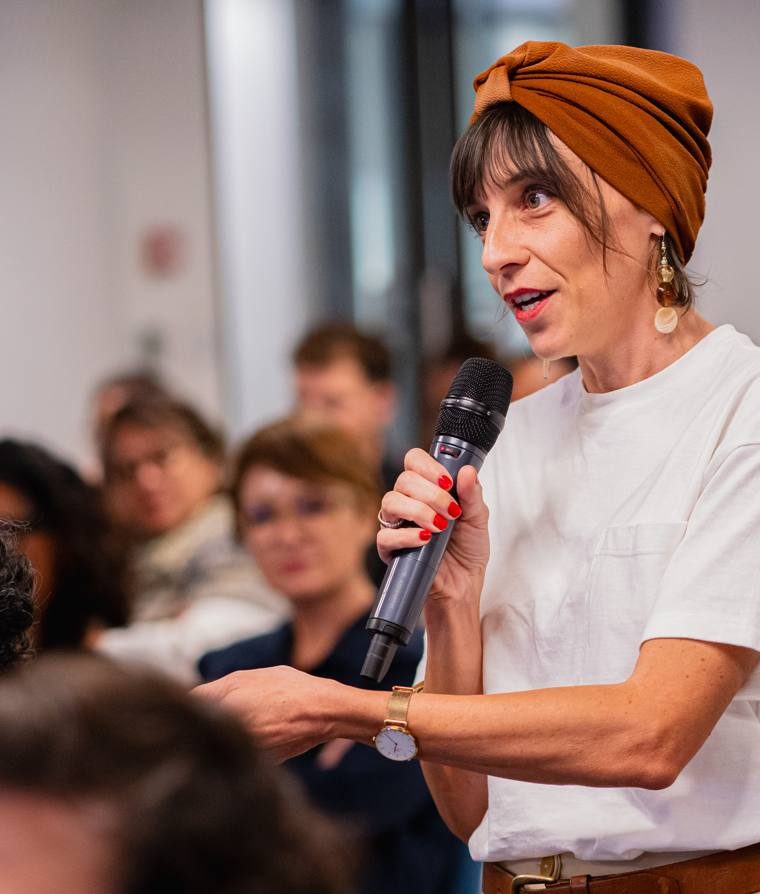
On the environment, a question from the floor opens the most uncomfortable passage of the day: the big tech companies' carbon-neutrality commitments have vanished from recent reports; copper tells the material truth of digital: ten tonnes of earth per tonne extracted fifty years ago, eight hundred today. The answers are sober: reserve generative AI for what actually needs it, prefer small local models, build consumption into prioritisation. Kenya set the precedent by turning down a data centre.
The room · The debate opens onto schools and water · Photo Laurent Frédéric
“Ethical AI is not risk-free AI. It is AI whose risk is managed.”
Pratimah Jugoo Teeluckdharry · Compliance & MLRO
Control grid before an AI-assisted decision
1 · Source
What data and what rules produced this recommendation?
Reveals: actual traceability, not assumed traceability.
2 · Competence
Can the person signing off recognise an error or an exception?
Reveals: whether the “human in the loop” is real.
3 · Impact
Who is on the receiving end, and what harm follows an error?
Reveals: the level of control required.
4 · Challenge
Can the affected person ask for an explanation or a review?
Reveals: whether the system remains accountable.
5 · Stop
Who can suspend the system, and how fast?
Reveals: the ability to contain an incident.
Grid built from the morning panel · editorial synthesisMOOOVE · 2026 · 12
MOOOVE FWD #3 · Morning panel · Test13
Editorial test
The accountable-judgement test.
Score 0 if the answer is no, 1 if partial, 2 if demonstrable. This grid summarises the panel; it does not replace a legal or regulatory audit.
The room · Photo Laurent Frédéric
1
Is the problem stated without naming a tool?
The need, the decision or the friction must exist before the solution.
Anouchka · magical thinking
2
Does the user know what must never be shared?
The rules must fit on one page and be tied to concrete examples.
Pratimah · simple rules
3
Is the approved alternative as easy as the public tool?
Banning without an alternative manufactures shadow AI.
Pratimah · the safe option
4
Does the person signing off have both the expertise and the time?
A human click is not validation if nobody can explain the output.
Jean-Michel · accountability
5
Does the decision-maker know what they master and what they delegate?
Metacognition must come before use in a sensitive decision.
Anouchka · metacognition
6
Can an error be reported and fixed without being hidden?
The reporting channel is part of the security system.
Pratimah · safe reporting
0-4 · Fragile
The set-up rests on individual goodwill.
5-8 · Partial
Rules exist, but validation or the alternative is still weak.
9-12 · Workable
The system makes good decisions easier and errors visible.
Decision to make
Publish a one-page rulebook, designate the approved tool, name the validating expert, and open an escalation channel.
See also: the control grid before an assisted decision: p. 12 · the six-line usage charter: p. 14 · Manish Bundhun's conscience test: p. 17
Grid built from the morning panelMOOOVE · 2026 · 13
MOOOVE FWD #3 · The tool · after Pratimah Jugoo Teeluckdharry14
Tool 2 · pull-out
The usage charter in six lines.
Most companies answer risk with a thirty-page policy. Nobody reads it, shadow AI carries on, and the first leak comes through the most efficient employee. The opposite method fits on one page.
01Short, clear rules. One page, not thirty. What you can do, what you cannot, where to ask.
02The stranger test. Before pasting data into a tool: “would you give this to a stranger?” If not, it doesn't leave the building.
03A safe, approved alternative. The secure option must also be the easy option, or it will be bypassed.
04Training on real cases. Yours, not theory slides. People learn on the documents they actually handle.
05A no-blame reporting channel. A reported error stays an error. A hidden error becomes a data breach.
06Management behaviour. A manager who demands speed without providing the frame teaches that shipping beats protecting.
The common mistake
An exhaustive policy, cleared by legal, circulated by email. A ban with no alternative pushes usage out of IT's line of sight: the risk does not disappear, it becomes invisible. The Samsung engineers were neither careless nor malicious: they were in a hurry. What to do: cut the friction on the safe option until it is faster than the risky one.
The Air Canada precedent
The chatbot invents a refund policy. The customer claims it. The airline argues the chatbot is “a separate entity, responsible for its own actions”. The tribunal rules against the airline. Practical consequence: any automated response sent to a customer binds you legally. Two non-negotiables: real human supervision, and a stop button that works.
“Governance is not a barrier. It is a bridge: deploy safely, not slowly.”
Pratimah Jugoo Teeluckdharry · point 6 determines the other five
To do this week · write the page and test it on three employeesMOOOVE · 2026 · 14
Photo · Laurent Frédéric
The right to question is part of the design.
A company does not become AI-ready when objections disappear. It becomes AI-ready when objections can improve the decision.
MOOOVE FWD #3 · Announcement · MOOOVE FWD #416
Announcement · 9-10 September 2026 · Port-Louis
Urban Retreat.
You don't leave having learned what generative collective intelligence is. You leave having become it. Two days in which a leadership team learns to think with AI as a single system. A framework born at the MIT Center for Collective Intelligence, never before run in Mauritius.
Jenny Korten
30 years in media and leadership, neuroscience since 2010. Thinking 5.0 partner, CPD UK.
Fiona Hills
20 years training executives in cultural change. Creator of Cafe Style Experiential Learning.
Gerry Skerritt
Team-performance specialist. Built Dream Team Catalyst across Southern Africa.
Missak Vehouni
Creator of Thinking 5.0. 30 years in HR. Has taught at INSEAD and HEC.
Day 1 · The Rewire
Learning through play: thinking differently alone, then together, then with AI as a partner rather than a tool.
Day 2 · The Engine Room
Define, analyse, generate, evaluate, plan and control with Socrates AI in the loop: an AI that never answers, it only asks questions. Twelve days of access after the retreat.
Rs 25 000
One day, per person
Rs 45 000
Both days, individual seat
Rs 225 000
Table of six: 5 seats, 1 free
The retreat took place on 9 and 10 September 2026.
MQA approved · CPD UK 14 points over two days · HRDC eligible · with FocusU and GMHR Academy · sold by the table: a team that comes together leaves alignedMOOOVE · 2026 · 16
MOOOVE FWD #3 · Conference · Keynote17
Manish Bundhun · Chief People Executive, ER Group
What a company must not outsource.
His question is not only: which tasks can AI take? It is: which capabilities must we exercise more, once the machine handles the work that can be spelled out?
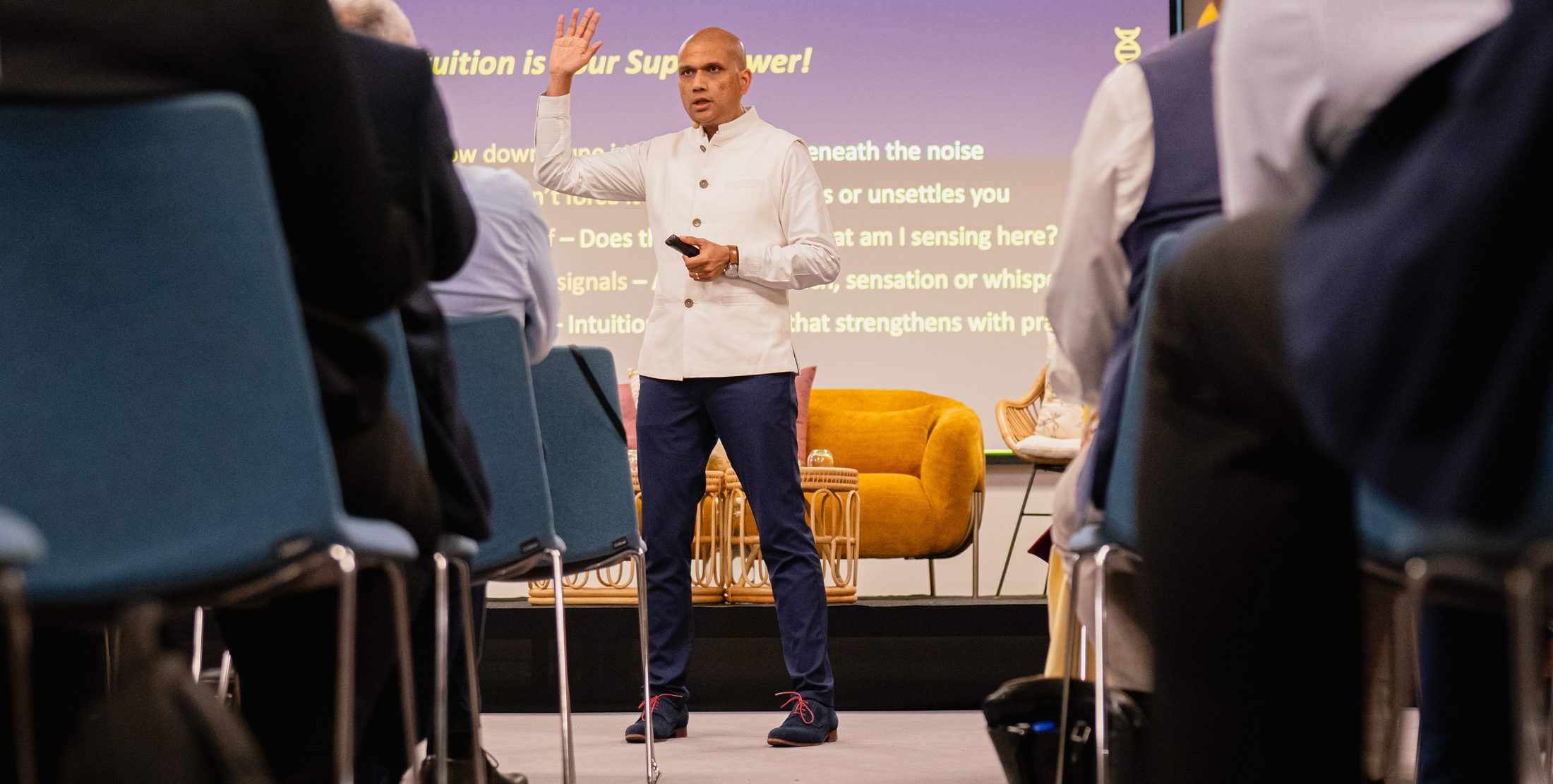
Manish Bundhun · “What it means to be truly human in the age of AI” · Photo Laurent Frédéric
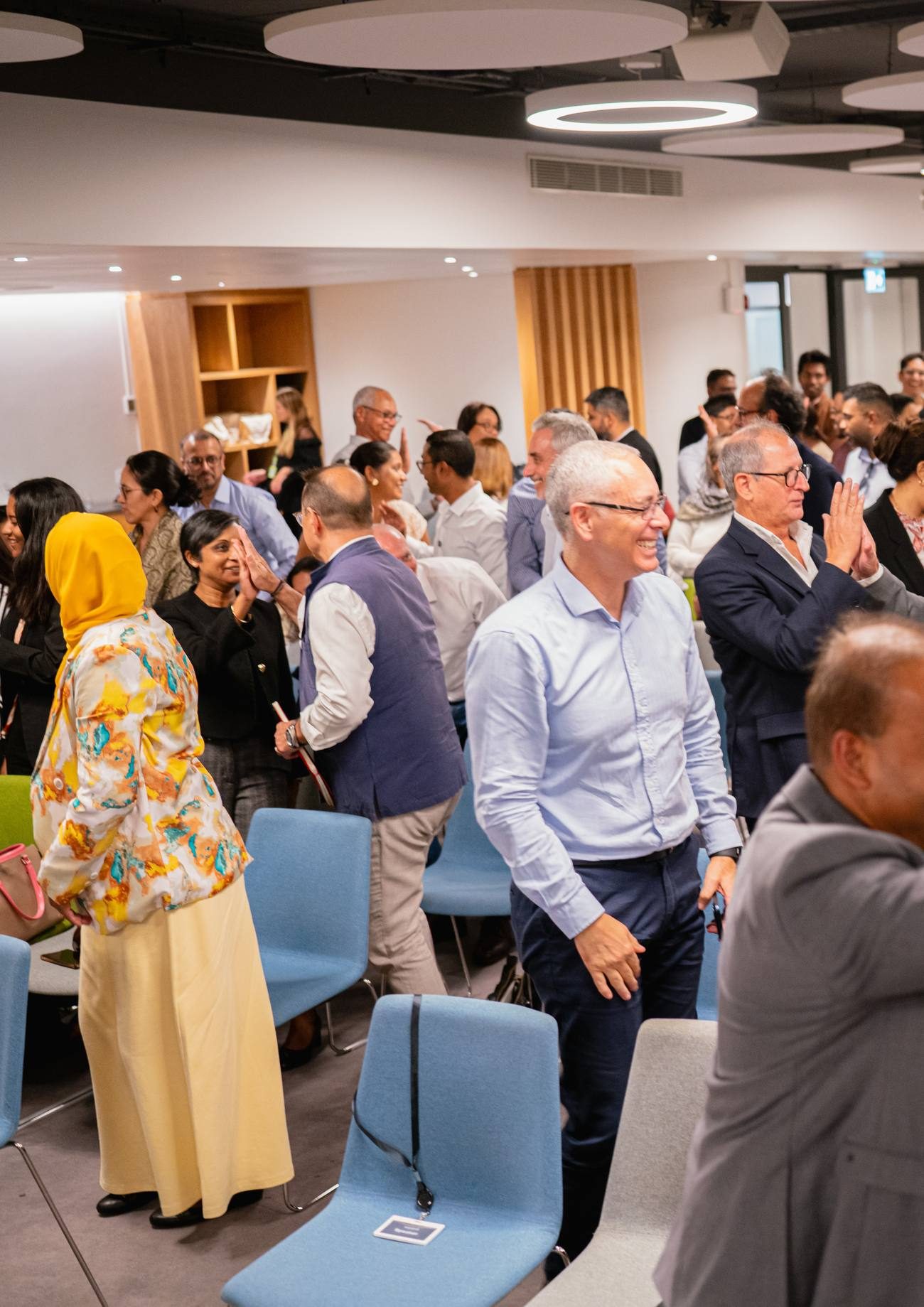
He had the worst slot of the day, straight after lunch. He asked the whole room to stand up and high-five their neighbour, then explained why that gesture was the subject of his talk: human connection is not only described, it is lived.
“I'm often asked whether I think AI will replace our jobs. Coming from HR, that is not what worries me most. What worries me is that we stop being human. That we outsource our thinking.” His rule is simple: whatever is repeatable, articulable and stable will be automated. The whole keynote consists of naming what is not.
Tool 3 · The conscience test
Before letting a machine decide:
1Can I explain this decision to the person affected, and am I comfortable doing so?
2Would I accept it if it were made about me?
3Can a competent person overturn it?
Three noes: the decision should not belong to a machine.
“As AI evolves in speed, our role as humans is to evolve in soul.”
Five axes: what the machine follows, what the human follows.
The mechanism runs through two physiological signals. The first is unremarkable until you see the numbers: posture. At fifteen degrees of tilt, your neck carries the equivalent of twelve kilos; at thirty, eighteen; at sixty, twenty-seven. The second is more serious: the more we outsource our thinking, the fewer neural connections we build, and the prefrontal cortex, like a muscle, shrinks from disuse. “We become more like machines, instead of being human.” This is where he meets the morning speakers: the debate about schools is not pedagogical, it is a debate about what we protect.
01 · Patterns → purpose. Machines follow patterns; humans follow a purpose. His fill-in-the-blank formula: “I am the [metaphor] who [action verb] [positive impact].” He quotes Simon Sinek, “I am the optimist who inspires people to do what inspires them.” What all these statements share: service to others.
02 · Logic → values. Three values maximum, made visible in daily words and acts. “Values are not declared, they are shown. The parents in this room know it: our children follow what we do, not what we say.” The exercise to find them: describe yourself as an object, then name three qualities of that object.
03 · Rules → intuition. His favourite axis, and the most unexpected at an AI conference. He distinguishes the cognitive mind from the somatic one, the body's. Three pieces of advice for recovering intuition: stop and listen; feel it without forcing it; grow it through practice. “Rarely, very rarely, does your intuition mislead you.” Why we don't hear it: ambient noise, and our habit of running it straight into analysis until it dissolves.
04 · Code → conscience. “Code executes, conscience humanises. The machines' job is to make it work. Ours is to make it right.” From this comes the three-question test on the previous page, probably the most directly usable tool of the day.
05 · Efficiency → empathy. Three words we confuse: sympathy, feeling for you; empathy, feeling with you; compassion, empathy plus action. “People remember you for how you made them feel, not for your efficiency.” Four moves: listen without judging, see from their perspective, name the emotion, act. With a nuance many managers would gain from hearing: most of the time, people are not waiting for you to act. They want to feel seen and heard.
And he closes on the three fundamental emotional needs: to be seen, to be heard, to be recognised. This is where the line that silenced the room arrives. These systems were designed, with help from neuroscientists, to agree with you. A validation bias, built in. The result: they make you feel seen, heard and recognised, and they are starting to replace our capacity to get that from one another. “I'm afraid my children feel more connected to ChatGPT than to me. That they open up more easily to a machine than to their parents. That's a third alarm bell, for me too.”
“The three emotional needs of a human being: to be seen, to be heard, to be recognised. These machines give you all three. That is exactly the problem.”
Manish Bundhun · 2.30 p.m. keynote · the line that silenced the room
Jenny Korten's analogy describes a common failure: the company imposes a tool, then reads low usage as resistance to change. Resistance is not the cause. It is a symptom.
The opening question was the right one: what is the most underestimated reason transformations fail? Four answers, one idea: mindset. “People believe transformation happens with technology. Technology, you install. Transformation is led by people.” Diya Nababsing-Jetshan. And the most operational version, from Sandeep Mohapatra: when you start from the technology instead of the customer outcome, you rebuild the old habits on a new platform.
Then comes the fish. Most companies buy AI, put it on the table and announce there will be fish at every meal, like it or not. What that produces is not adoption: passive consumption, then dependency, then resistance. The root cause: no psychological safety. The reversal fits in one sentence: hand over the same fish, but say “take it, experience it, so you become a better fisherman.” The fish hasn't changed; the relationship to the fish has. And the employee who builds skill develops a sense of belonging: they are part of the system, not part of the load.
Her case study is brutal, and it works as a warning. A European company sets up an AI task force: compliance, cybersecurity, data protection, IT. Nobody from culture, nobody from learning, nobody from HR. Result: 20 % usage for the investment made. The worst damage lands on middle managers, squeezed between a leadership ordering them to eat the fish and a task force governing by fear. “How do you expect them to win?” What unlocked it: instead of imposing a tool, they were asked which human capabilities to develop in order to work well with the machine. “All of a sudden, middle-management mindset shifted.”
The theory underneath lights up the rest: AI holds explicit knowledge, returned at a speed we cannot match. But 65 to 70 % of human knowledge is tacit: it does not transfer. “If fifty thousand artists use the same AI with the same explicit knowledge, where is the creativity?”
“Resistance to change is a symptom, not the cause.”
Jenny Korten · Panel transcript
Observable culture
Celebrate. Tolerate. Cultivate.
Three questions for the executive committee: which use of AI gets rewarded? Which risky behaviour gets let through? Which capability is practised every week? What you tolerate because the conversation would be uncomfortable ends up becoming the culture.
Worth keeping
Speed is not the opposite of human involvement. A fast prototype lets users see, touch, challenge and improve the solution sooner.
Source · Transcript of the afternoon panelMOOOVE · 2026 · 19
MOOOVE FWD #3 · Afternoon panel · Four contributions20
Portraits of ideas
Four signals to watch before you launch.
Each speaker offers one simple test. Together they spot a project that is not ready, even when the technology works.
The second bench · Jenny Korten, Manish Bundhun, Diya Nababsing-Jetshan and Sandeep Mohapatra · Photo Laurent Frédéric
Jenny Korten
Handing over the “fish” and mandating its use creates a passive consumer. Using the tool to become a better “fisherman” changes the relationship: the employee learns, observes and builds capability.
SIGNAL: can objections be voiced without risk?
Manish Bundhun
Culture is leadership: what you celebrate, tolerate and cultivate, stabilised by four wheels, the STAR acronym: stories, tribe, artefacts, rituals. Rituals first: they make the system independent of its champions.
SIGNAL: do leaders use and model the new behaviour?
Diya Nababsing-Jetshan
Before any project, talk to the business owner who asked for the technology. No time? Not a priority. Meeting delegated to IT? Then the project is going nowhere.
SIGNAL: does the business owner protect time for the problem?
Sandeep Mohapatra
Legacy is not software, it is a mindset. Three questions: why does this process exist? Starting from zero, how would we design it? What would it take to make it ten times better for the customer? And on build or buy: never outsource your decisions, your customer context, trust. Buy the rest. For skills, the four Bs: build, buy, borrow, bot.
SIGNAL: did we simplify before automating?
“When expression becomes abundant, judgement becomes scarce. And what is scarce creates competitive advantage.”
Sandeep Mohapatra · his value chain of an idea: express, duplicate, distribute, consume
Score each question 0 to 2. The score does not measure the quality of the tool. It measures the organisation's ability to adopt it without reproducing its old reflexes.
Photo Laurent Frédéric
1
Can teams voice their fear or disagreement?
Psychological safety comes before buy-in.
Jenny Korten
2
Does the tool build capability or dependency?
The goal is to make the user more competent.
Jenny Korten
3
What does leadership celebrate, tolerate and cultivate?
Actual behaviour has to back the speech.
Manish Bundhun
4
Does a ritual make the new behaviour repeatable?
Transformation must not depend on a single champion.
Manish Bundhun
5
Does the business owner own the problem and the outcome?
Time, a measure and the authority to arbitrate are all required.
Diya Nababsing-Jetshan
6
Are users involved before the solution is chosen?
They should test the options, not discover the system at the end.
Diya Nababsing-Jetshan
7
Was the process rethought before automation?
Legacy is an organisational habit too.
Sandeep Mohapatra
8
Does the target outcome genuinely change the customer experience?
The 10X is about simplicity, time, or how intuitive the journey is.
Sandeep Mohapatra
0-6 · Not ready
The project is still technology-led or imposed.
7-11 · Needs preparation
The sponsor exists, but behaviour and users are not aligned.
12-16 · Testable
The problem, the leadership and the process can carry a real pilot.
An organisation becomes AI-ready when…
…it stops talking about AI strategy and asks how to win in the AI era.
Sandeep Mohapatra
…people are no longer afraid to use it, understand its limits and invent their own solutions.
Diya Nababsing-Jetshan
…it puts the human back in the loop and intelligence becomes collective.
Jenny Korten
…what we celebrate, what we tolerate and what we cultivate finally point the same way.
Manish Bundhun
Grid built from the afternoon panelMOOOVE · 2026 · 21
Photo · Laurent Frédéric
You don't push people. You design the conditions in which they move.
Clarity of purpose, a business role, room to try, the right to question, the example set by leadership. “We are human beings, not human doings.”
MOOOVE FWD #3 · Announcement · Training23
Training programme · Pereybère · from August 2026
The House of AI.
A space to learn, test and execute, not one more classroom. Every session produces something concrete: a working environment, a Skill, an assistant or a functioning prototype. The direct answer to what the room asked for all day: practice, on their own cases.
01
Fluency
Understand generative AI, hold a conversation with it, and choose a first use case.
02
Working in Claude
Build a project with persistent instructions and create a Skill.
03
Working in ChatGPT
Set up a project and build a reusable personal assistant.
04
Personal challenge
Scope, build, test and then present a working AI solution.
Jean-Michel Lavallard · CEO of Ordisys Mauritius · Photo Laurent Frédéric
Thirty years bringing digital into organisations, always through the same door: usage. Schoolteacher, then head of education at Apple and Microsoft, senior consultant for the World Bank. His principle: never start from the tool, start from what you have to do on Monday morning. You heard him on page 11, on the morning panel.
MOOOVE × GMHR Academy · full track or single sessions · limited places to guarantee individual supportMOOOVE · 2026 · 23
Photo · Laurent Frédéric
From pilot to real work.
The conference built the criteria. The report turns them into leadership decisions: measure the real level, understand why the pilot dies, tackle the obstacles in order, pick the right case and install a cadence. Five pages of analysis, then the Mauritius study.
MOOOVE FWD #3 · Report · 1/6 · The anatomy of the blockage25
1 · Why the pilot dies
Why a pilot that works can die in production.
The pilot removes the difficulties one by one. Production puts them all back at once. Four dimensions where the gap widens.
In the pilot
In production
Data
Prepared sample, exceptions removed
Continuous flow, incomplete data, access rights and history
Users
Small volunteer group, supported
Varied profiles, daily pressure, need for support
Process
Isolated step, workarounds available
Integration with core systems, roles, escalation and audit
Measurement
Technical demonstration
Time, quality, risk, cost and satisfaction
How to read it: every row is a difficulty the pilot removed and production puts back.
A pilot is designed with production in mind. It is not celebrated as an end in itself.
70 to 80 % of the friction is human and organisational; only 10 % is technical. For each obstacle, the question to put to your own organisation.
01POC mania. How many pilots are running, and which one has an industrialisation date? More than four with no date: you are testing everything and scaling nothing.
02Fuzzy KPIs. What was the baseline, and which indicator was supposed to move? Without a baseline, the project dies at the first budget trade-off.
03Fragmented data. Is our data reachable outside its silos? If not, AI is layered on top of the systems instead of built into them (McKinsey: 70 %).
04Business ownership. Who carries the project: a business owner, or IT alone? 70-80 % of failures come from adoption, not from the technology. Diya's test, page 20.
05“Sexy” use cases. Chosen because it is visible, or because it is expensive? Chatbots demo well in committee; the value sits in the friction: recurring errors, repetitive decisions, wasted time.
06Skills. Generic training, or role-specific? Tailored tracks deliver up to twenty times more adoption.
07Project or transformation. After the rollout, what did you change other than the tool? Nothing: “High Adoption, Low Transformation”. Everyone has the tool, nothing has moved.
Five unfavourable answers or more: your risk is not missing AI. It is believing you have adopted it.
FOUR FIRST, NOT SEVEN PARALLEL WORKSTREAMS : Four of these obstacles determine the rest and must be handled first: no business owner, no baseline, an unredesigned process, data and access rights left unprepared. Dispersion kills depth.
Across more than 1,000 transformations analysed, BCG identifies the principle that separates leaders from laggards. Companies that fail overinvest in technology and underinvest in change. Leaders do exactly the opposite.
10 %
Algorithms and AI models
20 %
Data and infrastructure
70 %
People, processes, cultural transformation
Why the ratio is counter-intuitive. The model is the thing you buy, the line you budget, the demo you show the board. The remaining 70 % is invisible on a quote: redesigning a process, training by role, changing what you measure, holding the uncomfortable conversations. Organisations therefore naturally fund what is visible. That is exactly the inversion BCG measures among laggards. And it is the statistical version of what the Caudan stage repeated all day: Marc Israel's rewiring, Jenny Korten's fish, Manish Bundhun's mindset. Seven speakers, without coordinating, all described the 70 %.
The external gap: you against your competitors. On Rogers' adoption curve, profitability concentrates among early adopters; past the late majority the gap becomes hard to close, because leads compound: every quarter of usage improves the data, the processes and the judgement of the competitor who started before you. Your exact position on the curve matters less than its direction: if your competitors are operationalising while you are piloting, the gap widens every quarter, quietly.
The internal gap: your teams against you. While you discuss AI in the executive committee, your employees are already using it, in their browser, ungoverned. The blind spot is dangerous because it looks like good news: “our teams are getting on with it”. But ungoverned individual use produces personal productivity and nothing else: no shared process, no accumulated data, no collective learning. And leadership credibility erodes: according to Gartner, only 8 % of managers are genuinely AI-competent. Banning makes it worse (shadow AI, p. 14). Letting it run scatters it. The only way out: govern the usage that already exists, channel it into team-level cases, and train the managers first.
The one-question test at your next leadership meeting: who around this table has built an agent themselves this quarter?
Reread your 2026 AI budget too: if 70 % goes into technology, you are funding the part that gets replaced
Adoption report · BCG AI at Scale 2025 · PwC CEO Survey 2026 · Gartner · McKinseyMOOOVE · 2026 · 27
MOOOVE FWD #3 · Report · 4/6 · The path28
4 · Choose and execute
The seven-step playbook.
The companies that made it through all apply the same sequence, with discipline. It is simple. It is not negotiable, and every step skipped is paid for at the next one.
01Start from a business problem, not a technology. Identify the bottlenecks: where do we lose time, quality, money? At this stage, the word “AI” is banned.
02Qualify the use case. Two axes: business value × feasibility. Target the high-value / high-feasibility square, and nothing else.
03Frame it rigorously. A quantified objective, success indicators, a team, a scope. This framing will kill or save the project at step 7.
04Prepare the data. Full audit: silos, cleaning, standardisation. This step determines 80 % of success, and it is the one most readily skipped.
05Experiment on a limited scope. Prove it works small, fast, on real data. Not in a lab.
06Industrialise. Integration into existing processes and tools. Secure it. Train end users by role.
07Measure and iterate. Track the step-3 indicators, collect feedback from the field, identify the uses worth replicating.
The priority score /20
Four criteria scored out of 5: business value, data and systems feasibility, manageable risk, adoption and ownership. Threshold: do not launch a production-bound pilot below 14/20, nor if business ownership scores less than 3/5.
The 90-day loop
Days 1-30: framing, baseline, data. Days 31-60: pilot in real conditions, users in the loop. Days 61-90: industrialise or stop, an explicit decision. Four roles minimum: business owner, data lead, risk lead, executive sponsor.
The 90-minute meeting, Monday
Pick a friction that costs money · name the owner, the baseline, the decision expected · classify the use case green, amber or red (p. 10) · identify what a human must still explain, judge and overturn · set a 30-day prototype.
Adoption report · sequence observed among the 5-6 % who reach scaleMOOOVE · 2026 · 28
MOOOVE FWD #3 · Report · 5/6 · The evidence, and the horizon29
5 · What the 6 % do
Three proofs that the model works.
A global insurer, an investment bank, the big consulting firms. Three different categories, one thing in common: AI applied to core processes, measured in results rather than demos.
AXA · scale
Ranked the world's number-one insurer for AI innovation (Evident, 2025): close to a quarter of all AI research papers from the top 30 insurers, and 42 % of the citations. A concrete case: wildfire prevention through satellite image analysis. A record net profit of €9.8 billion in 2025, driven partly by AI applied to core processes. The lesson: research builds the “what you own” column (p. 8).
JPMorgan · integration
AI there automates contract analysis and detects fraud: cases embedded in critical processes, not shop windows. This is the move from a generic POC to a precise triptych of business × process × data. The principle: don't chase the demo, chase the integration.
The consultancies · measurement
McKinsey, BCG, PwC and EY no longer measure impact in logins but in human time reallocated. BCG: 15 % less time on low-value activity, 70 % of the time saved reinvested in deep analysis, more than 40 % of revenue tied to tech and AI. The right indicator: where did the freed-up time go?
The horizon: agentic AI
17 → 29 %share of AI value generated by agents · 2025 → 2028
62 / 23 %are experimenting with agents / have one in production
For the most advanced, classic scaling is already no longer enough. Agentic systems, able to perceive, plan and act, are gaining ground. And the 2026 issue, according to McKinsey, is no longer trust in the tools: it is trust in hybrid human-AI workflows, the ability to define what each actor, human or agent, decides, controls and validates. You will recognise Manish Bundhun's conscience test (p. 17): the same three questions, asked of an entire system.
The value of AI is not in the tools. It is in an organisation's ability to reorganise its work around them.
Synthesis · after McKinsey, BCG, MIT, PwC
Adoption report · Evident AI Index · annual reports · McKinsey State of AIMOOOVE · 2026 · 29
MOOOVE FWD #3 · Report · 6/6 · And Mauritius?30
6 · The MOOOVE study · 259 leaders
Almost everyone has started. Almost nobody has operationalised.
The adoption gap is not an imported abstraction. MOOOVE measured it here, a few weeks before the conference: 259 leaders and teams answered eighteen questions across three phases. The result comes down to one tension: appetite is not the problem, method is.
88 %use AI at least occasionally
44 %have not yet brought it into their real work
90 %plan to train their teams in 2026
The local picture reproduces the global one (McKinsey: 88 % adoption, 6 % impact), on an independent measure. 83 % of respondents say they are comfortable with AI, and 88 % use it. But usage stays personal: asked “what do you use AI for”, the single most-selected answer in the whole questionnaire is “I don't use it for my work yet”, at 44 %. Management reporting tells the same story: 52 % still track their indicators in Excel spreadsheets, and only 15 % have automated dashboards. The tools are in people's hands; the value stayed on the table.
The gap is all the more striking because these leaders know what needs fixing. Their main difficulties: recruiting and keeping the right people (38 %), moving too slowly against competitors (24 %), too much manual copy-paste (21 %), teams that collaborate badly (20 %). And the decisions they find hardest are precisely the ones better data would improve: strategic expansion (34 %), budget and forecasting (33 %), resource allocation (31 %). Half the market still makes them on a spreadsheet.
The intent is there, the method is missing. 87 % have considered AI as a solution; but 61 % “dug into it on their own”. Only 21 % brought in outside expertise, and 18 % actually trained their teams. Among those who have not adopted, the brakes are not scepticism: company maturity (51 %) and lack of support (45 %). This is a market asking to be shown the way, and telling you how: concrete practice (59 %), real examples from its own sector (34 %), the fundamentals for the whole team (48 %).
The five maturity tiers · n = 259
Explorer · the hesitant4 %
Ignition · the starter44 %
Momentum · the practitioner22 %
Mastery · the architect10 %
AI-Native20 %
How to read it: 48 % of the local market (Explorer and Ignition) has not yet brought AI into its workflows. That is, at the scale of Mauritius, the population of the adoption gap described on pages 25 to 28.
The very small outfits are the most operational: the founder adopts personally, fast, without a committee. Large companies catch up through sheer resources. In between, the 11-to-50 band has lost the founder's agility without acquiring a large company's capacity. That is precisely the business fabric Mauritius has most of, the one that most needs a structured programme, and the one least likely to get there alone.
Operational, by sector
Technology72 %
Banking & finance68 %
Education62 %
Professional services31 %
Manufacturing12 %
Sixty points separate technology from manufacturing. The gap is not explained by access to tools (the same for everyone at a thousand rupees a month) but by how work is organised around them. That is the thesis of the day, and the thesis of this report, verified on 259 local responses.
What this means for 2026
01The Ignition → Momentum gap becomes the fault line. Those who get AI into the workflows will compound their lead; the others will plateau.
02The spreadsheet caps decision speed. Automating reporting is the first move with the best effort-to-effect ratio.
03The training window will not stay open. Demand is strong and specific right now. Theory-led programmes will not convert.
04Beware the pilot purgatory here too. The two brakes named (maturity and support) are treated with method (p. 28), not with more tools.
Where to start, this quarter
One or two high-return cases: get reporting out of Excel, kill the manual copy-paste. Guided training on those real workflows. A shared direction and a short usage charter (p. 14). One main assistant, a few proven prompts, and a measure of time saved from the very first week. And start where the teams asked: the fundamentals for everyone, then automation, with examples from their own sector.
Methodology: 259 valid responses, contact details deleted before analysis. Two harmonised questionnaire versions; options under 1 % grouped or omitted. Scored against the 2026 five-tier framework: Explorer (0-19), Ignition (20-44), Momentum (45-74), Mastery (75-104), AI-Native (105+). Full report: mooove.club
MOOOVE AI Readiness Study 2026MOOOVE · 2026 · 31
MOOOVE FWD #3 · What's next32
What happens next.
9-10 Sept. 2026 · Port-Louis
MOOOVE FWD #4 · Urban Retreat
Generative Collective Intelligence: two days that made human capability and machine systems work together, with Socrates AI in the room, table by table (p. 16).
Learn, test, execute: the first sessions start in August, with Jean-Michel Lavallard (p. 23). The direct answer to what the room asked for all day: practice, on their own cases.
A conference born from a worry heard three times on this stage: screen time, teenage mental health, and children who confide more in a conversational agent than in their parents (p. 18).
01On the adoption curve (p. 28), where are we against our direct competitors, and how many months do we have before the risk zone?
02Where do our employees sit (personal usage) relative to us (organisational usage), and what are we doing to close that internal gap?
03Are we closing both gaps in parallel, or still treating AI as an IT project rather than a leadership transformation?
Worth keeping · worth doing · not to be lost
Worth keeping
It is not a technology problem, it is a rewiring problem: data, processes, culture, and the nerve to start small.
Worth doing
One repetitive task, one agent, twenty dollars a month; it won't work first time, and that's the plan.
Not to be lost
Judgement, intuition, empathy, reasoned disagreement, and the real: what happens when you close the screen.
MOOOVE FWD #3 · What's nextMOOOVE · 2026 · 32
“It hurts your fingers. It sounds wrong. And then one day, you hear the melody.”
The AI-Ready Business · 29 July 2026 · Caudan Arts Centre · MOOOVE × GMHR Academy · mooove.club Following edition · Urban Retreat, 9 & 10 September 2026 · Photo Laurent FrédéricLet's Mooove.